Non-surgical rhinoplasty
Non-surgical rhinoplasty in Ilford
Non-surgical rhinoplasty uses dermal filler to change the look of your nose without an operation. It cannot make a nose smaller. At our Clayhall clinic in Ilford, it is for over-18s only and starts with a consultation about what it can and cannot change, the risks and whether it is suitable for you.
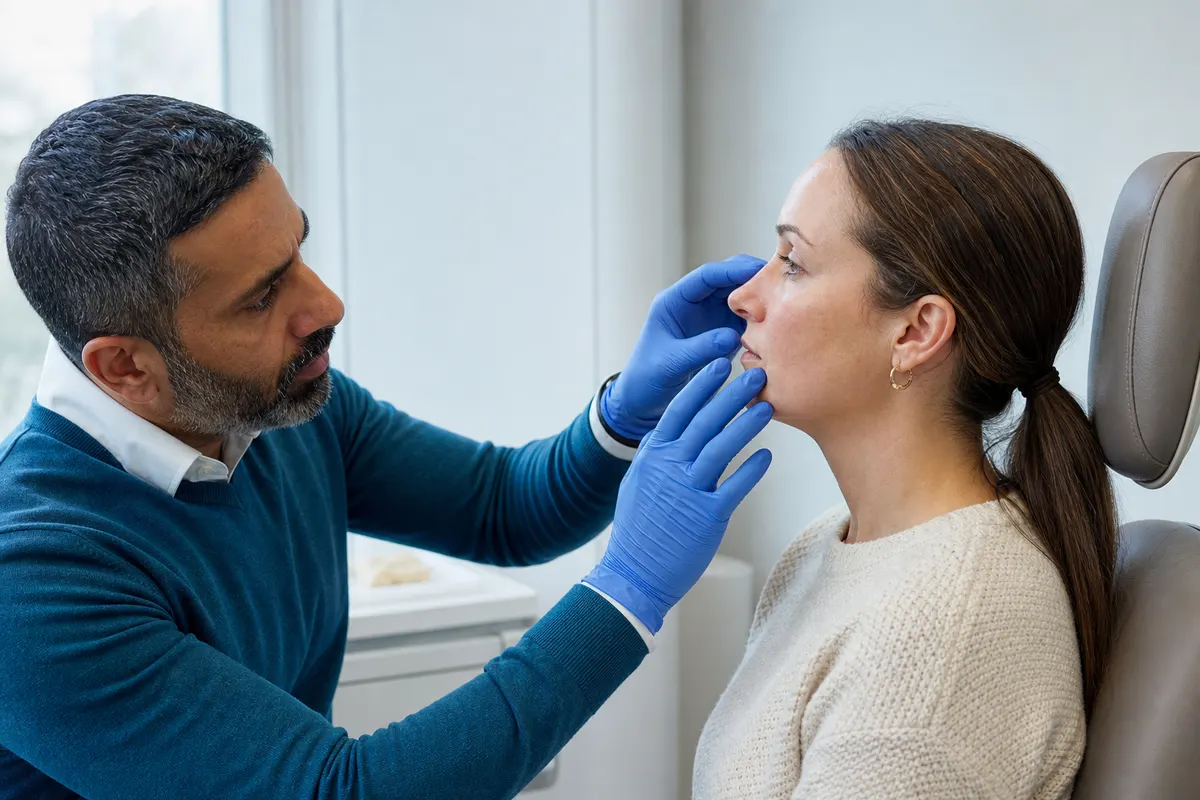
- Starts with A consultation
- Age Over-18s only, by law
- Where 420 Clayhall Avenue, Ilford IG5 0SH
What it can and cannot do
It helps to be clear from the start.
- It can smooth a bump or change the profile of your nose
- It cannot make your nose smaller or fix your breathing
- It wears off over time, so it is not permanent
- The nose carries more risk than other areas, including rare but serious complications
Why the nose needs extra care
Non-surgical does not mean low risk. The JCCP, a register for cosmetic practitioners, lists the nose among the highest-risk areas for filler. Blood vessels here connect to those supplying the skin and the eye. If filler blocks or presses on one, Save Face describes it as a medical emergency.
A blocked vessel can cause skin damage, permanent scarring and, rarely, blindness. These events are not common, but you need to know about them before you decide, because they can be permanent.
This treatment is not right for everyone, and a responsible practitioner will say so. Surgery may be the better route if you want a smaller nose, have trouble breathing, or have concerns from a broken or injured nose. Filler cannot change those things.
Tell your practitioner about any injury, surgery or earlier treatment to your nose, because scarring and past filler can change the risk. If you are unsure, take the time to get a second opinion. Save Face says you should not feel pressured to book on the day.
Questions to ask before anyone treats your nose
Ask these of any practitioner, including us. If the answers are vague, you are free to leave.
- How many non-surgical nose treatments have you carried out, and what training did you have beyond a basic filler course?
- Which professional or accredited register are you on, and what is your number?
- What is the filler called, where did it come from, and is it temporary? Permanent fillers carry the highest risk.
- If filler blocks a blood vessel, what is your emergency plan, and is everything you need on site?
- Who can prescribe the medicines needed if there is a complication, and how quickly?
- Will you go through my full medical history and tell me honestly if I am not suitable?
- What insurance do you have, and who do I contact if I am worried afterwards?
Price should not be the deciding factor here. Avoid anyone who offers this at home, in a hotel or at a group event.
Side effects and the warning signs to know
Redness, swelling, bruising and tenderness are common and usually settle in the first few days. Other possible problems include infection, swelling that lasts longer, and an uneven result. Too much filler at the tip of the nose can cause pressure damage to the skin.
The general filler advice from Save Face also applies. It may not suit you if you are pregnant or breastfeeding, unwell, or have an infection near the area. The same goes if you have a bleeding disorder or autoimmune disease, take medicines that affect bleeding or steroids, or have reacted to a filler or local anaesthetic before.
In England it is a criminal offence to inject filler for cosmetic reasons into anyone under 18, and a parent cannot give permission. Follow the aftercare you are given. In general, that means avoiding make-up for 12 hours, then vigorous exercise, sun, sunbeds and saunas for at least 48 hours.
Get urgent help if you have any of these during or after treatment:
- Severe pain
- Skin turning white or unusually pale
- A mottled or dusky appearance, or colour changes that get worse
- Blurred vision, loss of vision or any sudden change in your sight
Call 999 or go to A&E straight away for any sight change or severe pain, then tell your practitioner. Do not wait to see if it settles. You can report side effects to the Yellow Card scheme, run by the UK medicines regulator.
What happens
It always starts with a conversation, and there is no pressure.
-

Holding image 1Consultation
We talk through your concerns, your health history and your options.
-
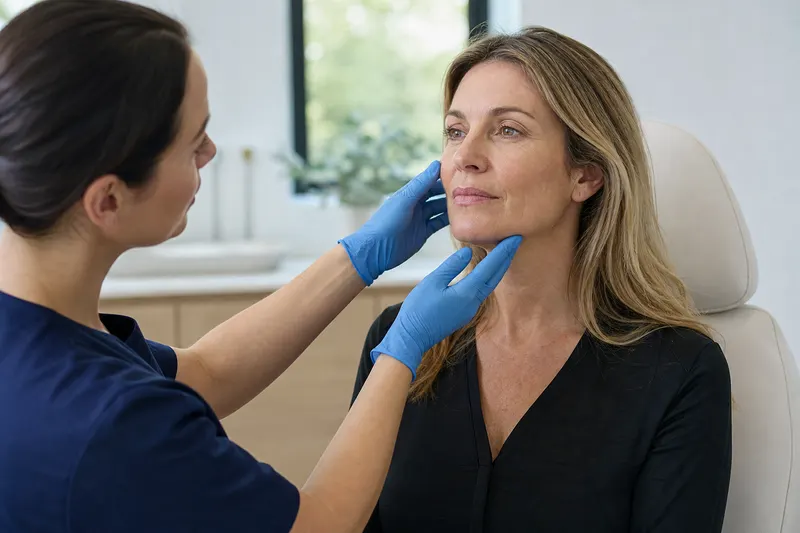
Holding image 2An honest assessment
We tell you what is realistic, what the risks are, and whether treatment is suitable for you.
-

Holding image 3Aftercare
If you go ahead, you get clear aftercare advice and know how to reach us.
Who treats you
Your practitioner explains the risks in full, and will tell you if they think you should not go ahead. Sharmila Selvarajah carries out the treatment herself.
Questions people ask
Is it safer than surgery?
It is less invasive, but it still carries real risks. We will explain them so you can decide.
Does it replace a surgical rhinoplasty?
No. It changes the look of the nose but cannot do what surgery can.
How long does it last?
It wears off over time. Your practitioner will give you a realistic idea at your consultation.
Where to next
Ready when you are
- 420 Clayhall Avenue, Ilford IG5 0SH
- Mon to Fri 9am to 7pm, Sat 9am to 2pm
- 07401 494728
- WhatsApp us
- Free street parking. Two steps at the entrance.