Lip fillers
Lip fillers in Ilford
Lip fillers add shape or volume to your lips using a dermal filler, which is a gel placed under the skin. At our Clayhall clinic in Ilford, including the Russian lip technique, treatment is for over-18s only and starts with a consultation about what you want, the risks and whether it suits you.
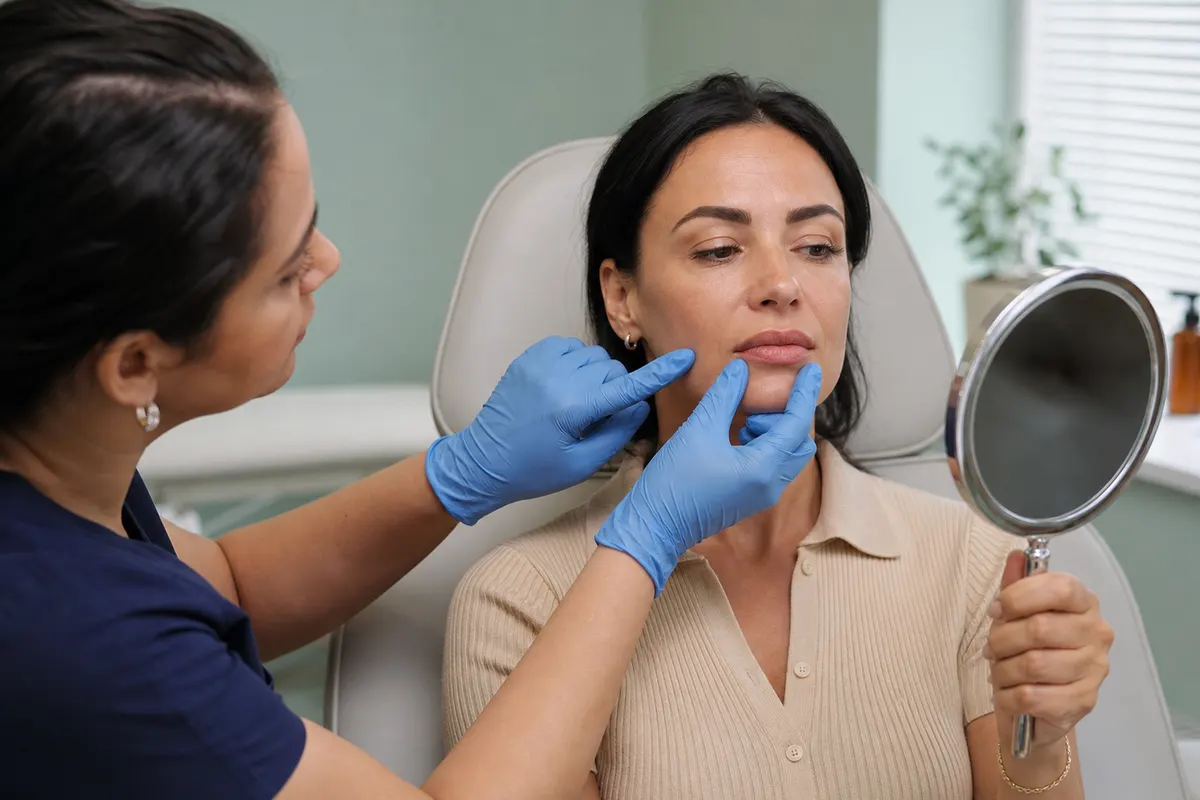
- Starts with A consultation
- Age Over-18s only, by law
- Where 420 Clayhall Avenue, Ilford IG5 0SH
What to think about first
We would rather you felt sure.
- What you would like to change, and what you would like to keep
- Classic lip filler, or the Russian lip technique
- The risks: swelling and bruising are common, and serious problems are rare but possible
- Dermal fillers wear off over time, so treatment is not permanent
Thinking it through before you book
Lip filler is your decision, and it deserves more thought than a photo on your phone. The NHS suggests asking yourself what you want to change, why you want to change it, and what made you think of it now. It also warns that influencers are usually paid to promote the clinics and procedures you see on social media.
A cosmetic procedure will not make everything better. If you are going through a hard time, it can be worth waiting. Tell your practitioner about any past or current mental health problems.
Filler wears off over time, so think about the full cost, including aftercare and any treatment you might want later. If someone suggests the Russian lip technique or another named method, ask why they suggest it for you and what risks come with it. A technique name is not a safety standard.
You should be offered time to think after your consultation, and you can walk away at any point.
In England it is a criminal offence to inject filler into anyone under 18 for cosmetic reasons, or to book them in for it. A parent or guardian cannot give permission. A careful practitioner may ask you to prove your age.
Questions to ask about lip filler
Fillers do not always need a prescription, so the checks fall on you more than you might expect. Ask these of anyone, including us:
- What qualifications, training and experience do you have with lips in particular?
- Which professional or accredited register are you on, and what is your number?
- What is the name of the filler, who made it, and where did you get it?
- Is it temporary? Permanent fillers carry the highest risk, and the JCCP, a register for cosmetic practitioners, does not regulate them.
- How much filler do you plan to use, and can we agree that before you start?
- If filler blocks a blood vessel, what would you do, and how quickly could you get the prescription medicines needed?
- What insurance do you have, and who do I contact if I am worried afterwards?
The NHS advises avoiding practitioners who have only done a short training course, because complications can be serious.
Who should not have it, side effects and aftercare
Save Face, an accredited register, says lip filler is not suitable if you are pregnant or breastfeeding, unwell even with a cold, or have a skin infection in or near your lips. The same applies if you have reacted to a filler or local anaesthetic before, have an autoimmune disease or bleeding disorder, or have a poorly controlled medical condition. Taking steroids, medicines that affect bleeding, or certain acne medicines in the last 18 months can also rule it out.
Tell your practitioner if you get cold sores, because injections in the face can trigger them. Also mention any recent filler, and any history of keloid scars, which are raised scars that keep growing.
Redness, swelling, bruising, itching, tenderness and pinprick marks are common. They usually settle in the first few days, although bruising can take longer. Swelling is often worse the next morning, so plan around any events.
Serious problems are rare, but they can include:
- Infection
- Lumps under the skin, which may need medical treatment
- Filler moving away from where it was placed
- Scarring
- A blocked blood vessel, which can cause tissue death and permanent blindness. The JCCP lists the lips among the highest-risk areas for this.
Aftercare is general: avoid make-up for at least 12 hours, and avoid alcohol, vigorous exercise, sun, sunbeds and saunas for at least 48 hours, or as your practitioner advises. Call 999 or go to A&E straight away if you have severe pain, skin turning pale, patchy or dusky, or any change in your sight.
What happens
It always starts with a conversation, and there is no pressure.
-

Holding image 1Consultation
We talk through your concerns, your health history and your options.
-
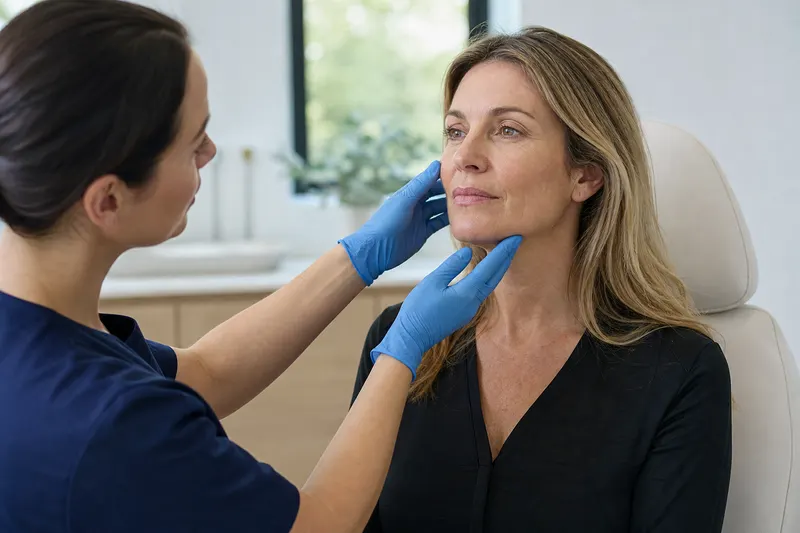
Holding image 2An honest assessment
We tell you what is realistic, what the risks are, and whether treatment is suitable for you.
-

Holding image 3Aftercare
If you go ahead, you get clear aftercare advice and know how to reach us.
Who treats you
Your consultation covers your health history, and whether filler is suitable for you. Sharmila Selvarajah carries out the treatment herself.
Questions people ask
Does it hurt?
You may feel some discomfort. We will talk through how we keep you comfortable.
How long does swelling last?
Swelling and bruising usually settle within days. We give you aftercare advice before you leave.
What are Russian lips?
A way of placing filler that aims to lift the lips and give a more defined shape.
Where to next
Ready when you are
- 420 Clayhall Avenue, Ilford IG5 0SH
- Mon to Fri 9am to 7pm, Sat 9am to 2pm
- 07401 494728
- WhatsApp us
- Free street parking. Two steps at the entrance.