Allergy testing
Allergy testing in Ilford
Allergy testing is available at our clinic in Clayhall, Ilford. We offer the ALEX test, a blood test that looks for allergic antibodies to many allergens, including foods. It costs £449.50, and results take up to 12 days. A result needs to be read alongside your symptoms, so we talk it through with you first.
- Test ALEX blood test Covers food allergens, among others
- Cost £449.50
- Results Up to 12 days
- Where 420 Clayhall Avenue, Ilford IG5 0SH
What a test can and cannot tell you
A test is one piece of the picture.
- It can show whether your body reacts to particular things
- A positive result does not always mean you will have symptoms
- It should be read alongside what actually happens to you
- Do not cut out whole food groups because of a test alone
When to get medical help first. Call 999 if you or someone else has swelling of the lips, mouth or throat, trouble breathing, or feels faint after contact with an allergen. That is an emergency, and a test cannot help.
Allergy, intolerance and sensitisation: what the words mean
These words mean different things.
- Allergy: your immune system reacts to something that is normally harmless, such as a food or pollen. A reaction can start within minutes or after a few hours.
- Food intolerance: your immune system is not the cause, and it does not lead to a serious allergic reaction. Symptoms often appear several hours after eating and may depend on how much you had.
- Sensitisation: your immune system has met something before and remembers it. This does not necessarily mean you will react to it.
Why your history matters as much as the test
Allergy UK describes allergy as a clinical diagnosis: tests support what a clinician learns from you, and do not replace it. The British Society for Allergy and Clinical Immunology says no single test can confirm a food allergy on its own.
So a clear account of what happens to you helps whoever looks at your result. Before any appointment, it is useful to note down:
- What your symptoms were, with photos of any rash, hives or swelling
- How soon they started
- What you think set them off
- A food and symptoms diary, if you have been keeping one
Not all allergy tests have the same evidence behind them
This is general information about allergy tests in the UK. It is not a list of what we offer.
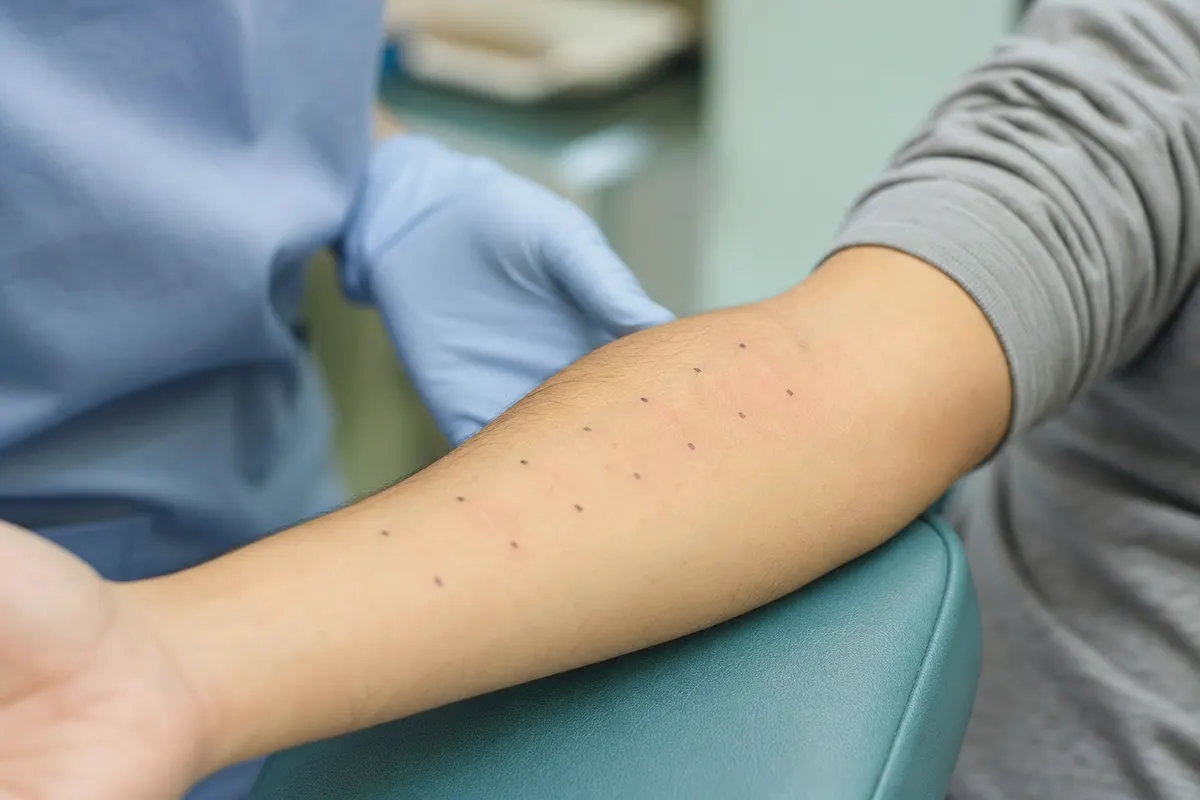
UK allergy specialists rely on validated tests. These include skin prick tests, where a tiny amount of a suspected allergen goes into the skin, usually on the forearm, and blood tests that look for allergic antibodies called specific IgE. Both need careful interpretation by someone experienced in them.
UK allergy organisations do not recommend the following for diagnosing an allergy, because the evidence does not support them:
- Hair analysis
- Applied kinesiology
- Electrodermal or Vega testing
- Blood tests that measure IgG antibodies to foods, which also form in healthy people with no symptoms
Wherever you have a test, it is reasonable to ask what it measures and how the result will be used.
Before you change your diet, and when to get help
Please do not cut foods out because of a test result alone. Speak to a GP or a dietitian first. Cutting out foods can mean you miss vitamins and minerals, which matters especially for children.
If you think you or your child may have an allergy, see your GP. They can arrange tests or refer you to a specialist allergy clinic.
If someone has a severe reaction, use an adrenaline auto-injector if there is one, and call 999 and say you think it is an anaphylactic reaction. Lie down with your legs raised, or sit up slowly if breathing is hard. Do not stand or walk, even if you feel better.
If you have reacted badly to something before, do not use a test result to decide for yourself that it is safe to try again. Talk to your GP or specialist first.
How it works
Three simple steps.
-

Holding image 1Choose your test
Tell us what you would like checked, and we will talk you through the options and how to prepare.
-
Holding image 2Your sample
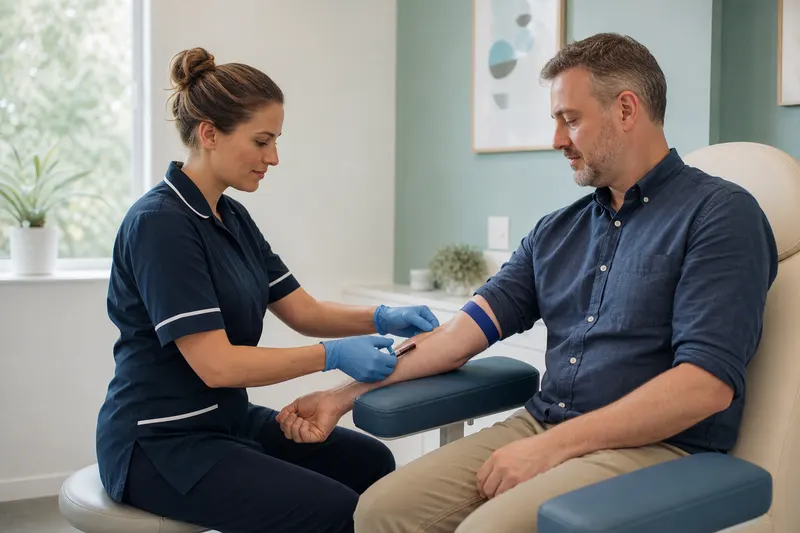
Come to the clinic and we will take your sample. It only takes a few minutes.
-

Holding image 3Your results
Your sample goes to the laboratory, and we tell you how you will get your results.
Who treats you
Sharmila Selvarajah, a registered osteopath and trained phlebotomist, takes the blood sample for the ALEX test at the clinic.
Questions people ask
Do I need a GP referral?
No, not for a private test.
Can I test for food allergies?
Yes. The ALEX test covers food allergens. A result needs to be read alongside what actually happens when you eat a food.
Should I stop my antihistamines first?
Some tests are affected by them. Ask us before you stop any medicine.
Is this the same as a food intolerance test?
Allergies and intolerances are different things, so ask us what a test can and cannot show before you book.
Where to next
Ready when you are
- 420 Clayhall Avenue, Ilford IG5 0SH
- Mon to Fri 9am to 7pm, Sat 9am to 2pm
- 07401 494728
- WhatsApp us
- Free street parking. Two steps at the entrance.